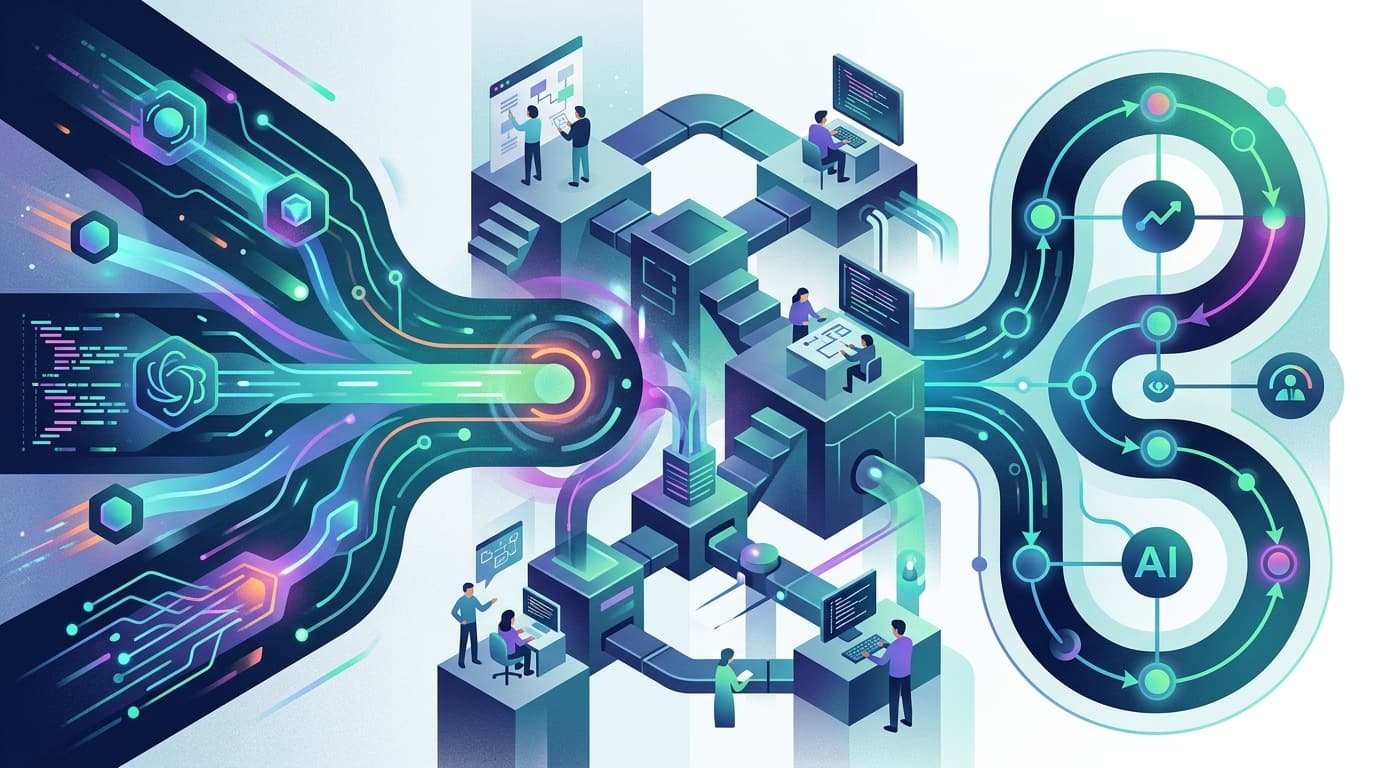

Picture a champion racehorse. All that muscle and speed is useless, even dangerous, until you add a bridle, reins, and a saddle. The horse supplies the power. The harness is what turns raw power into something you can actually steer, start, and stop. That single picture explains one of the most important shifts happening in artificial intelligence right now, and it is the reason some AI tools feel like reliable employees while others feel like impressive party tricks.
The AI model is the horse. The harness is everything wrapped around it. And the work of building that harness has a name: harness engineering.
What a harness actually is
When most people picture AI, they picture a chat box. You type a question, you get an answer, and the conversation ends there. That works fine for a quick question, but it falls apart the moment you ask the AI to do real work that takes more than a single reply. Write a question, get an answer is not how you run a multi-day research project or refactor a large codebase or generate a hundred-page report.
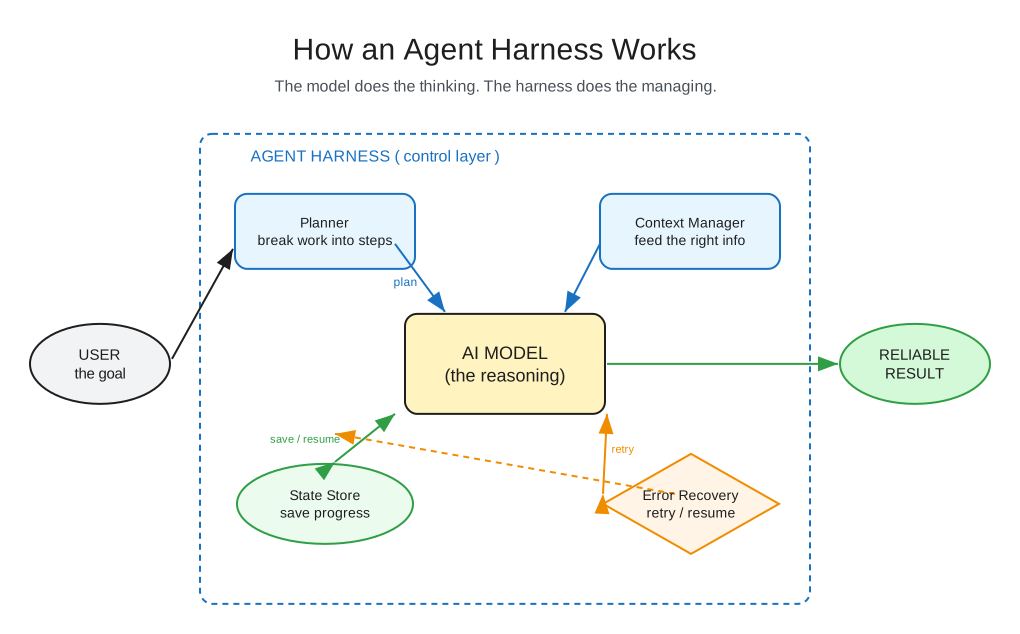
A harness is the layer of software that sits between you and the raw AI model and manages everything the model cannot manage on its own. Think of it as the difference between a brilliant but scattered genius and that same genius with a great project manager, a filing cabinet, a to-do list, and someone checking their work. The genius did not get smarter. The system around them got better, and suddenly the work gets finished.
In plain terms, the harness handles the parts of the job that have nothing to do with thinking. It decides what the AI works on and when. It hands the AI the right information at the right moment. It saves progress so nothing gets lost. It catches mistakes and tries again. The AI does the reasoning. The harness does the managing.
Why a raw model is not enough
It is tempting to assume that a smarter model fixes everything. If the AI just gets clever enough, surely it can handle anything. The industry believed a version of that for years, and it turned out to be wrong in an instructive way.
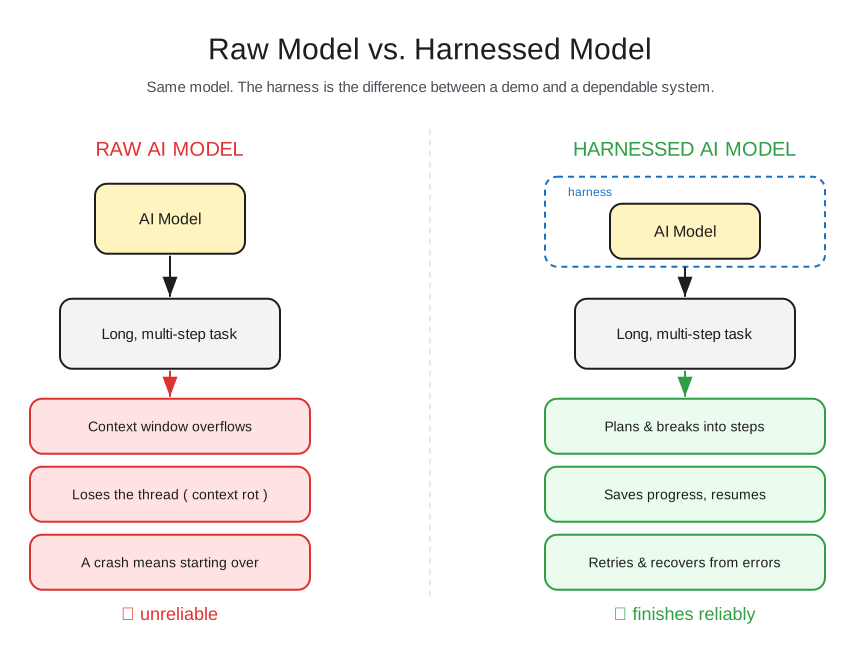
The problem is that even the best model has a limited memory. Every AI model can only hold so much information in its head at once. This working memory is called the context window, and you can think of it like a desk. A bigger desk helps, but every desk eventually runs out of room. When the desk fills up, things start falling off the edges. The model loses track of the original goal, forgets decisions it made an hour ago, and starts cutting corners to wrap up before it runs out of space. People who work with these systems have a name for this slow drift: context rot.
There is a second problem. A raw model has no memory between sessions. Close the conversation and everything is gone, the way a calculator forgets your last sum the moment you clear the screen. That is fine for a one-off answer and useless for any project that spans hours or days or survives a computer restart.
So the limitation was never really intelligence. It was everything around the intelligence. A genius with no notebook, no filing system, and a desk that keeps overflowing will still drop the ball on a big project, no matter how brilliant they are. The fix is not a bigger brain. It is a better workspace.
How a harness fixes it
A well-built harness solves these problems with a few sensible moves, all of which mirror how a capable person tackles a large job.
First, it breaks big work into small pieces. Instead of dumping an enormous task on the model all at once, the harness helps it form a plan, split that plan into manageable steps, and work through them one at a time. This is exactly what a good project manager does with a daunting project: nobody builds a house in a single motion, you pour the foundation, then frame the walls, then run the wiring, in order.
Second, it saves progress outside the model's head. As the AI completes each step, the harness writes the results down somewhere permanent, a database or a set of files, rather than trusting the model's crowded desk to hold everything. This is the single most important trick. Because progress lives outside the model, the work can pause and resume. If a step fails, the harness can retry it. If the computer restarts in the middle of an eight-hour job, the work picks up where it left off instead of starting over. The model gets a fresh, uncluttered desk for each step while the filing cabinet quietly keeps the whole project intact.
Third, it manages what the model sees. Rather than letting the desk overflow, the harness feeds the model only what it needs for the step in front of it and tucks the rest away in the filing cabinet until it is needed again. The goal is to keep the model focused, the way a good assistant hands you one folder at a time instead of burying you under the entire archive.
Add those together and something changes in character, not just degree. The AI stops being a clever tool you have to babysit and starts behaving like a digital worker that can be handed a real assignment and trusted to see it through.
What this makes possible
The practical payoff is that AI can finally take on work that used to be out of reach. A few examples that simply do not work without a harness behind them:
Deep research that runs for hours or days, pulling from dozens of sources, keeping track of what it has already found, and assembling it into something coherent rather than losing the thread halfway through. Long reports and analyses that pull together many documents and data sources, where the AI has to remember the beginning of the report while it writes the end. Complex software work, where an AI coding assistant makes a large change across many files and needs to keep the whole project straight. And autonomous jobs that have to survive the real world, where internet connections drop and services time out, and the work has to be picked back up rather than abandoned.
The common thread is endurance. Anything that takes a long time, involves more information than fits on one desk, or has to recover gracefully when something goes wrong, needs a harness. The flashy one-minute AI demo does not. The reliable system you would actually put to work does.
Harness engineering, prompt engineering, and the bigger picture
You may have heard of prompt engineering, the craft of wording your request to the AI well. That is real and useful, but it operates on a single conversation. Harness engineering operates one level up. It is not about phrasing one good question, it is about designing the whole system that lets an AI work reliably over hundreds or thousands of steps without someone watching every move.
There is a related discipline worth a quick mention: testing. A harness can also include a layer that checks the AI's work automatically, so the system verifies itself instead of grading its own homework. That deserves its own discussion, but it lives in the same family, building the structure around the model rather than just hoping the model behaves.
The bigger shift here is a change in where the hard work lives. For a long time the assumption was that better AI meant a better model, full stop. What we have learned is that the model is only one ingredient. The reliability, the patience, the ability to finish a long job and recover from failure, all of that comes from the engineering around the model. The harness is what separates a demo from a dependable system.
The takeaway
If you only remember one thing, make it the horse. A powerful model with no harness is a powerful horse with no reins: impressive to watch, hard to direct, and not something you would trust with anything that matters. Harness engineering is the unglamorous, enormously important work of building the reins, the saddle, and the filing cabinet, so that all that raw capability actually goes where you point it and finishes what it starts.
As AI moves from answering questions to doing real jobs, the harness is quietly becoming the part that matters most. It is the difference between an AI that amazes you for a minute and an AI you can actually rely on.
Frequently asked questions
What is harness engineering in simple terms? It is the work of building the support system around an AI model, the part that plans the work, hands the model the right information, saves progress, and recovers from errors, so the AI can reliably finish big jobs instead of just answering single questions.
What is an AI agent harness? It is that support system itself: the software wrapped around an AI model that manages everything except the model's actual thinking. It is the bridle and reins for an otherwise hard-to-steer model.
Why can't a smarter AI model just do everything on its own? Because every model has a limited working memory and no memory between sessions. On a long or complex job it runs out of room and loses the thread. The harness fixes that by saving progress outside the model and feeding it information one piece at a time.
How is harness engineering different from prompt engineering? Prompt engineering is about wording a single request well. Harness engineering is about designing the whole system that lets an AI work reliably across hundreds of steps and long stretches of time.
Who needs to care about this? Anyone relying on AI for real work rather than quick answers, deep research, long reports, complex automation, or any task that runs for hours and has to survive interruptions. The harness is what makes that kind of work dependable.