
Navistar International Truck
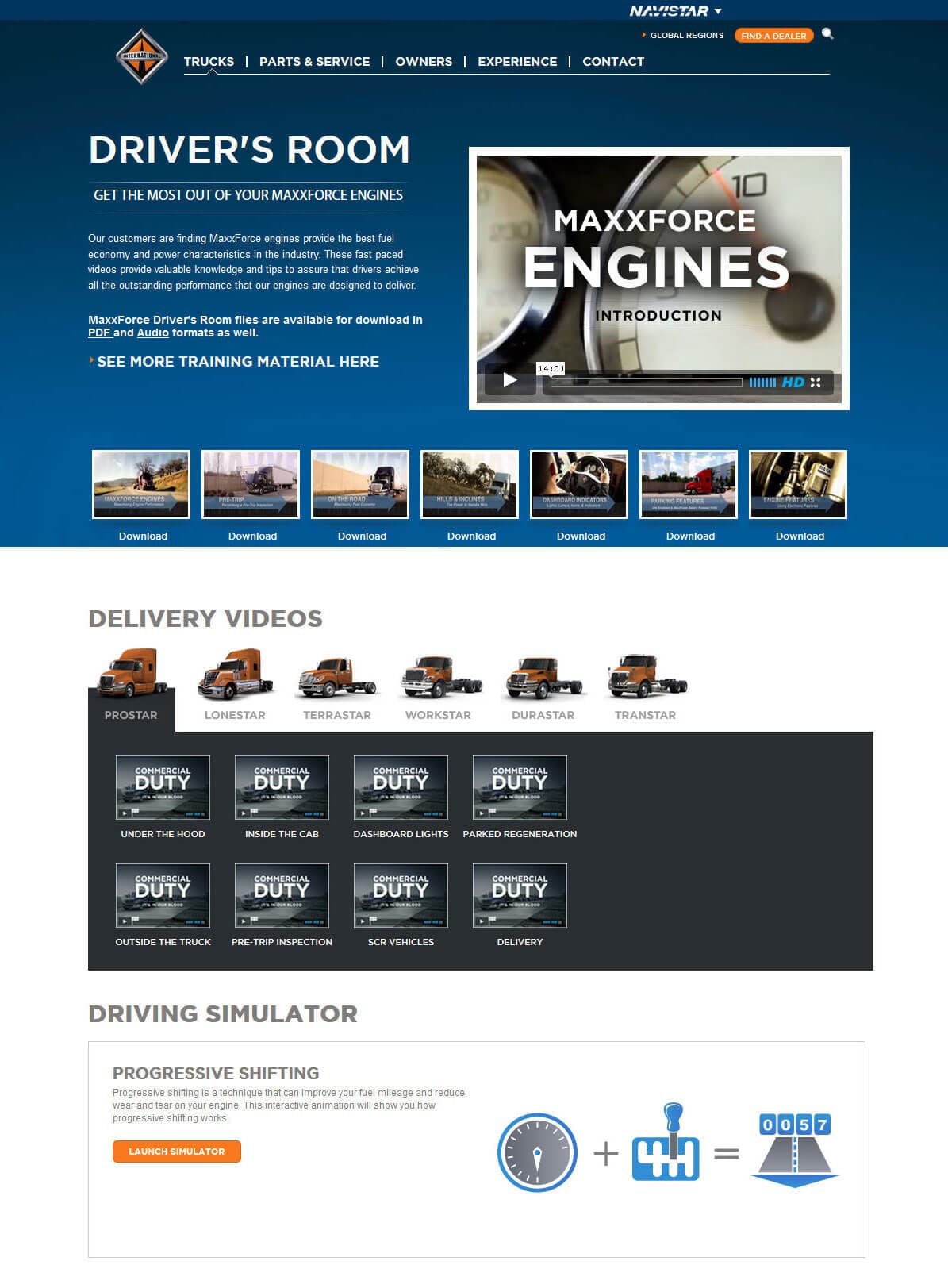
A family of product landing pages for Navistar's International truck lineup, giving truckers a showroom-quality digital experience and funneling qualified leads directly into the International Truck Sales App.
The Process·1 / 1
The Challenge
A Spec-Sheet Experience in a Showroom Moment
Fleet operators and owner-operators had quietly moved a large chunk of the truck-buying research process online. They'd show up to a dealer already narrowed to two or three models, with opinions on engines and expected TCO, and a short list of questions that were increasingly hard for a rep to answer in ten minutes.
International's digital presence wasn't built for that buyer. The product pages were functional spec sheets, accurate, comprehensive, and almost impossible to sell with. They read like a reference document, not a showroom walkthrough, and they gave prospects no reason to stick around.
Competitors were already further along. Larger OEMs and even some challenger brands were shipping cinematic landing pages with video, benefit-first copy, and embedded configurators. If International didn't catch up on the digital experience, it was going to keep losing top-of-funnel interest to brands that already had.
The pipeline consequence was real. Leads that never got captured online couldn't be nurtured, couldn't be scored, and couldn't be handed cleanly to a rep with the Sales App in their hand. Every prospect who bounced off a spec sheet was a prospect the sales team had to re-acquire through more expensive channels.
The Process
Buyer Journey, Modular Framework, Lead Integration
The work ran on four threads: buyer research, a modular landing-page framework, a per-page experimentation plan, and the lead-handoff integration to the International Truck Sales App.
Buyer-journey mapping
Interviewed dealers, fleet managers, and owner-operators to map how the online research and the in-person showroom visit actually interact. Pulled out the moments where a dealer-quality digital experience would have the highest leverage, and the moments where the spec sheet was failing.
Modular landing-page framework
Designed a reusable page framework so each truck configuration (Long Haul, Regional, Vocational) could launch fast without a design cycle every time. Blocks: cinematic hero, benefit-first narrative, configurable spec callouts, configurator teaser, social proof, and lead-capture form. Every block was content-driven: marketing could stand up a new variant in days, not weeks.
Experimentation plan
Wrote a per-page A/B roadmap covering hero imagery, CTA copy, spec-callout density, form length, and social-proof placement. Ran tests through Adobe Target with statistical rigor and a clear decision log: every variant that shipped had a measurable reason behind it.
Lead handoff to the Sales App
Integrated lead capture directly into the International Truck Sales App pipeline. When a prospect submitted a form, the rep who picked up the lead already had the landing-page context, which truck configuration, which benefits the prospect had engaged with, and what stage of research the lead indicated. Qualification in the Sales App could start mid-conversation instead of from zero.
The Solution
A Family of Showroom-Quality Landing Pages
A modular landing-page system that launched across International's truck lineup and turned the digital funnel into a real sales channel.
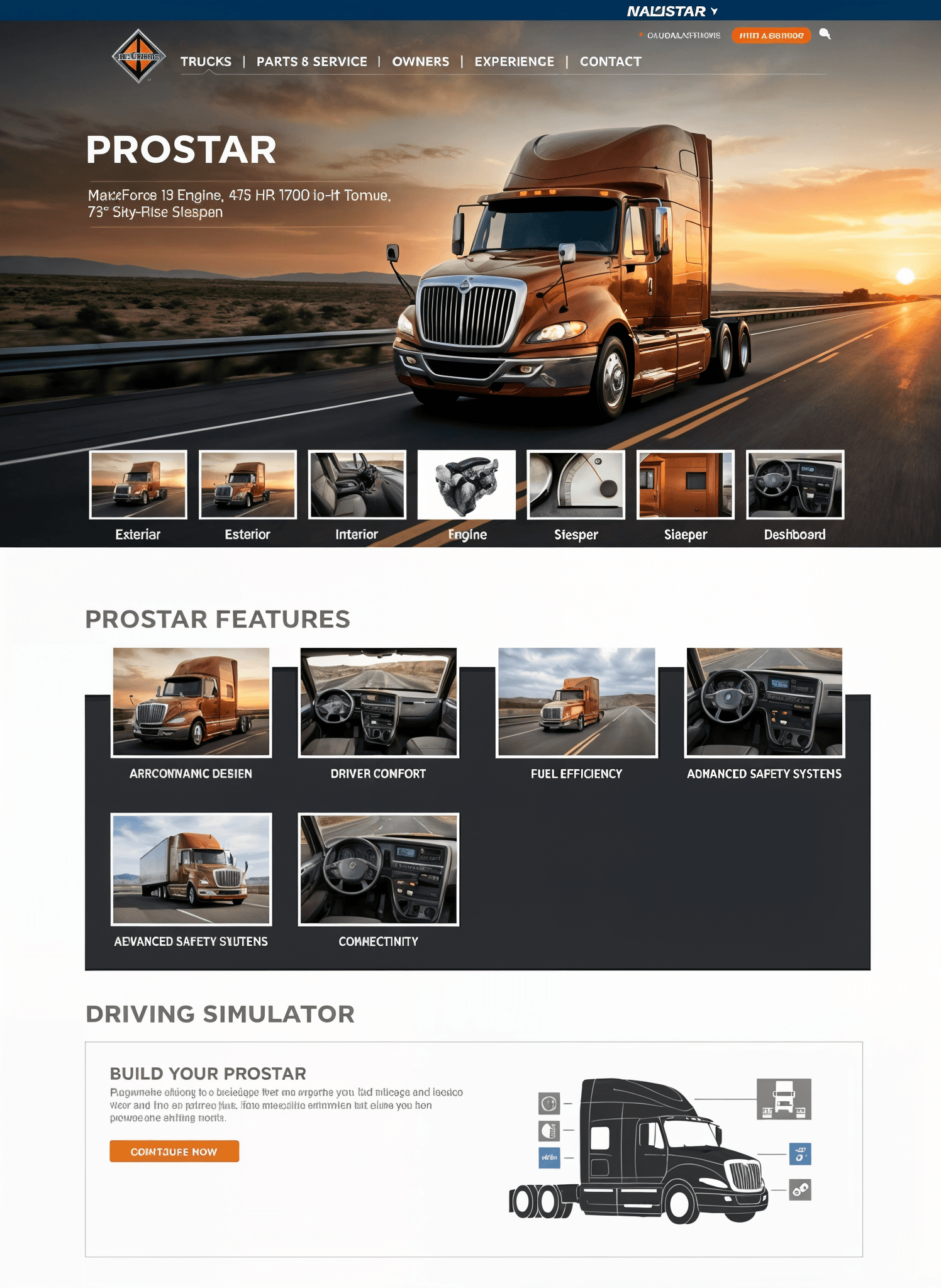
Cinematic hero, benefit-led copy. Each page opens on a full-bleed hero: truck imagery, bold typography, and a single primary CTA. Beneath the hero, the copy leads with benefits that matter to the buyer (total cost of ownership, uptime, driver comfort, resale value) before getting anywhere near a spec table.
Configurable spec callouts. Specs are surfaced as curated callouts: the three or four numbers that actually decide the purchase, with an expandable full-spec table for the buyers who want it. The PDP-style layout (reflected in the international-pdp.png screenshot) makes the truck feel like a product, not a catalog entry.
Tight lead form, strong handoff. The form captures only what the sales team actually needs to start a qualified conversation. Submissions route through the pipeline straight into the International Truck Sales App, with full landing-page context attached.
Dual-duty. The same page runs as a paid-campaign destination and as a rep-shared link during follow-up. One URL, two jobs, both on-brand.
The Results
From Spec Sheet to Sales Pipeline
The landing-page family shipped across the core configurations and immediately changed the shape of the funnel. Prospects stuck around, submitted leads at a materially higher rate, and handed off cleanly into the Sales App, so reps started every call further along than they used to.
The knock-on effect was the one that mattered most: the Sales App's pipeline started pulling a meaningful share of its new leads directly from the landing pages. That closed the loop between paid media, digital experience, and the in-person qualification tool, three things that used to operate in isolation now ran as a single funnel.