
Executive Summary
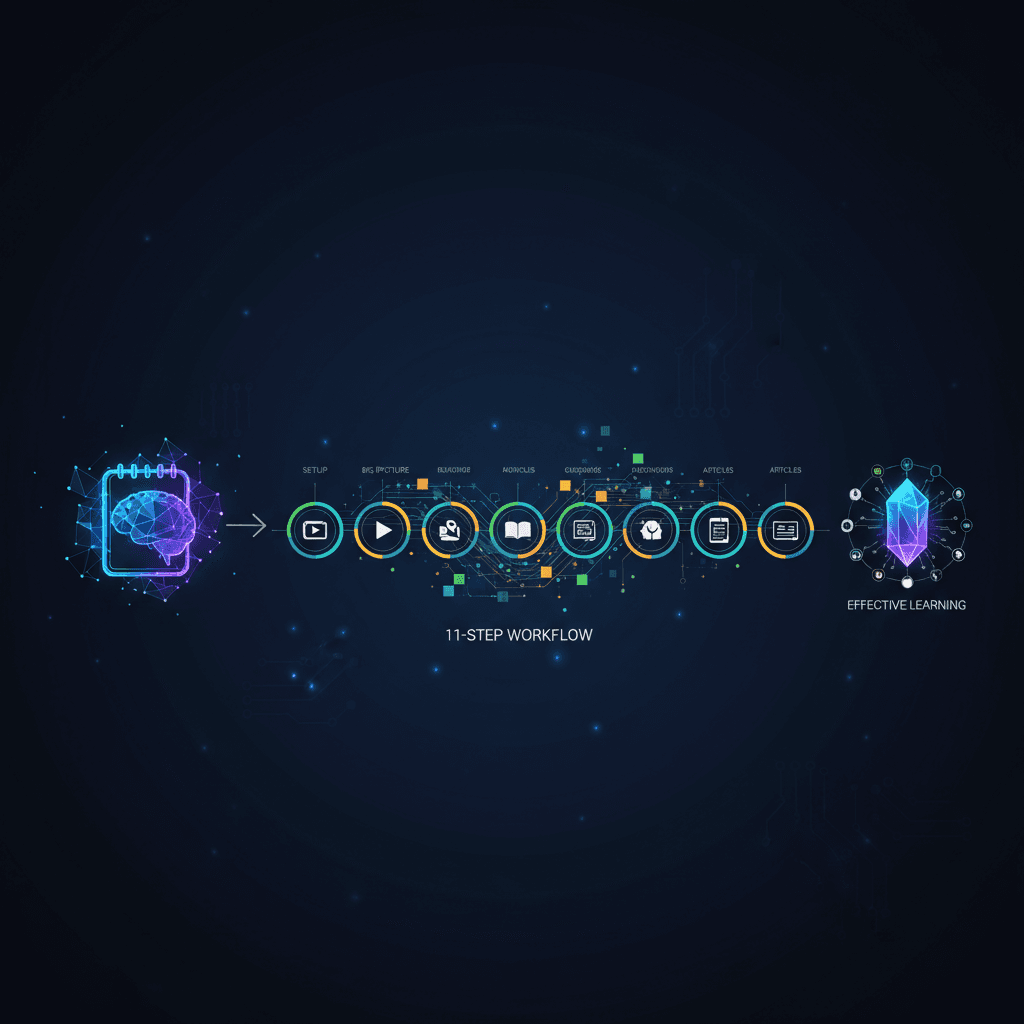
The author presents an 11-step workflow using NotebookLM designed to improve the learning process for dense technical materials such as books and documentation. The workflow is broken down into five phases:
- Setup: Create a dedicated NotebookLM instance and upload diverse sources (video tutorials, documentation/books, and articles/summaries) to create a triangulated view of the technology.
- Big Picture: Generate infographics to understand the core message and motivation behind the material. This phase helps in understanding the thesis visually and identifying key themes.
- Structure: Create mind maps to visualize how concepts relate to each other and generate slide decks for a structured walkthrough, making the material more digestible.
- Active Learning: Shift from passive consumption to active engagement by asking targeted questions and employing the Feynman Technique (explaining concepts simply to identify gaps in understanding).
- Testing & Retention: Generate quizzes to test contextual understanding and flashcards for terminology and definitions, reinforcing learning through active recall and spaced repetition.
The workflow emphasizes active learning, structured content consumption, and continuous testing to solidify understanding and retention. A key insight is that combining different types of learning resources (video, documentation, articles) provides a more comprehensive understanding than relying on a single source. Furthermore, the workflow is designed to be adaptable to different learning styles, as the optional audio/video overview can be leveraged by multimodal learners.
Actionable takeaways include the importance of dedicated learning environments (NotebookLM instance), diversified resource triangulation, and active engagement with the material through questioning, teaching back, and testing. By following this structured workflow, the author argues that it is possible to successfully learn even the most challenging technical subjects, such as the "Designing Data-Intensive Applications" book, and readers are encouraged to duplicate and use the NotebookLM notebook from the walkthrough as a template for their own learning.
This workflow provides a systematic approach to tackling difficult technical material. Its value lies in transforming passive reading into an active learning process. While NotebookLM is the specific tool used, the underlying principles of diversified resources, structured understanding, and active recall can be applied using other tools as well. The article successfully provides a very detailed breakdown of the process and offers valuable insights into improving the quality and retention of learned knowledge. The emphasis on actionable takeaways and a practical, step-by-step approach makes it a useful resource for anyone looking to improve their technical learning strategy.